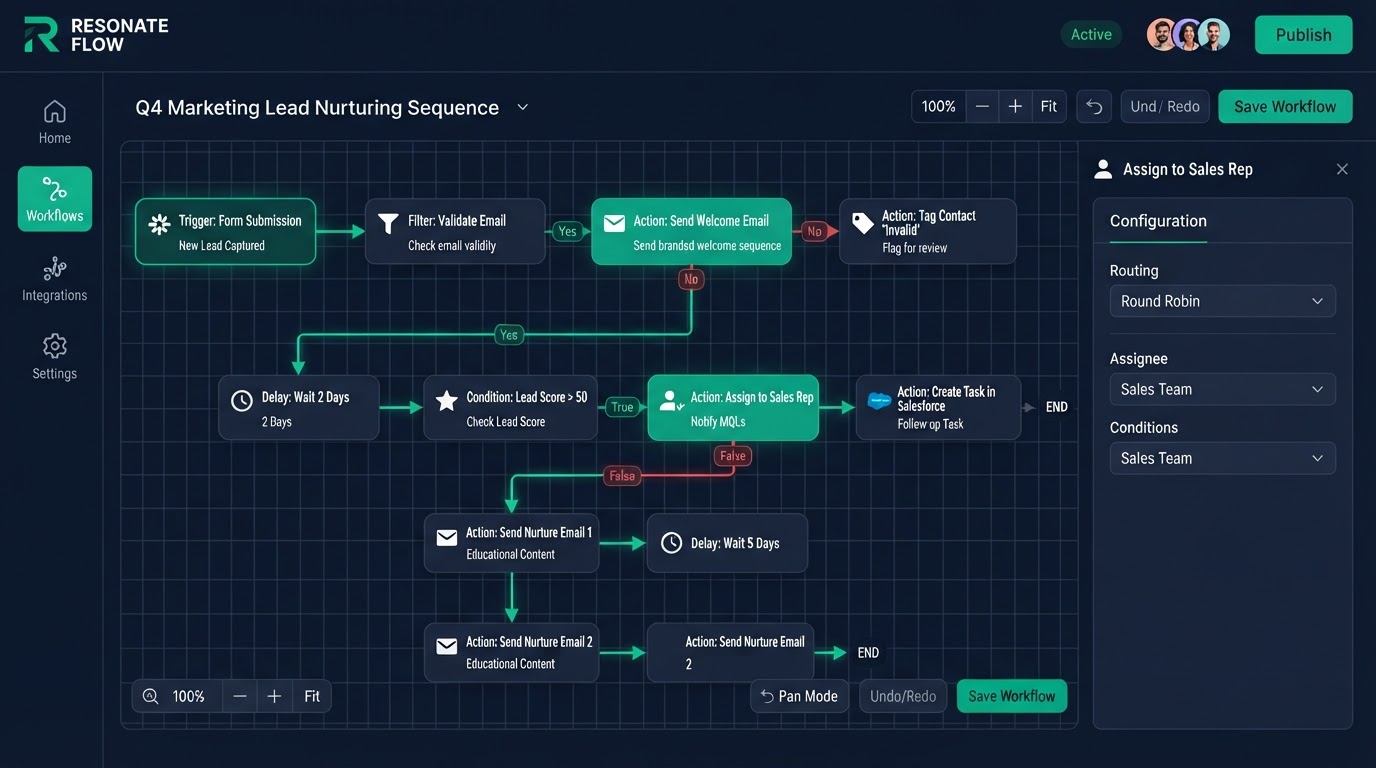
The platform does not live alone — it needs to talk to the rest of your tools. Lead sources, accounting, reporting, and custom apps all need to share data. Here is how API and webhook integrations connect your CRM to the rest of your stack without manual typing.
Key Takeaways
- Inbound and outbound webhooks: Inbound webhooks pull data from lead sources and forms into your CRM by themselves.
- Custom field mapping: Different tools use different field names and formats.
- Third-party API links: Most REST APIs and webhook-capable tools connect cleanly — Stripe, Zapier, accounting, reporting, and custom apps.
- Security and monitoring: We use proper auth and never expose credentials in client-side code.
Inbound and outbound webhooks
Inbound webhooks pull data from lead sources and forms into your CRM by themselves. Outbound webhooks push events to other tools when things happen. Together they wipe out manual typing between systems. A new lead in your ad platform can appear in your CRM and trigger follow-up with no human copy-paste.
Custom field mapping
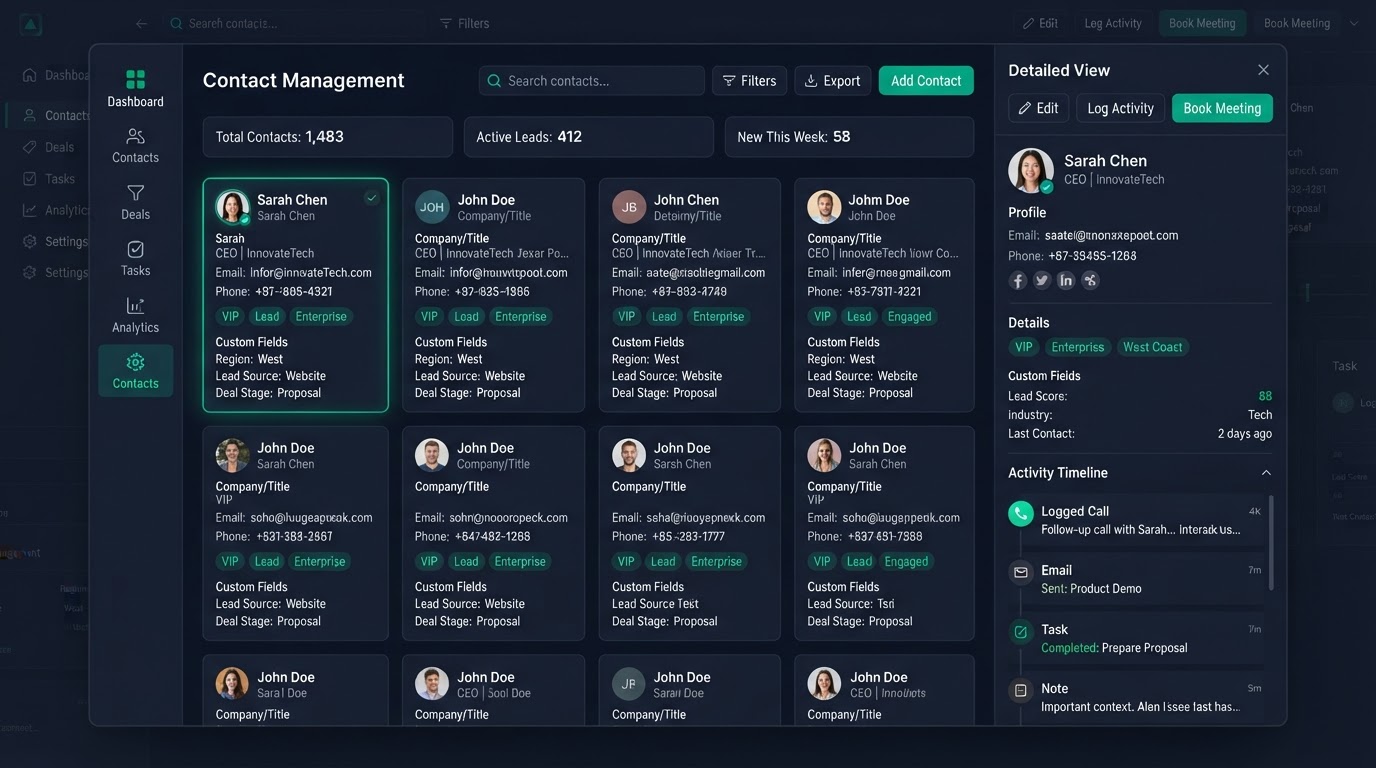
Different tools use different field names and formats. We map and transform fields so data lands in the right spot — a phone number from your lead source becomes the phone field in your CRM, not a notes dump. Bad field mapping is the number one cause of messy CRM data, so we get it right up front.
Third-party API links
Most REST APIs and webhook-capable tools connect cleanly — Stripe, Zapier, accounting, reporting, and custom apps. We handle auth, rate limits, and retries so links stay reliable. A flaky integration that drops data is worse than no integration, so we build for resilience.
Security and monitoring
We use proper auth and never expose credentials in client-side code. Error handling and retries make failures visible and fixable — no silent broken links. Credentials live on the server, not in the browser, so your keys stay safe.
Common integrations we build
Lead-source webhooks (Facebook, Google, direct forms), Stripe payment sync, accounting tools, reporting dashboards, custom internal apps, and Zapier for the long tail of tools. If it has an API or supports webhooks, we can connect it.
Get 1 Month Free + Free Setup + Free Support
Start your platform account through our link and get an extended 30-day free trial — plus we'll set up your system, build your first workflow, and support you for free. See it working before you pay a cent.
Claim 1-Month Free TrialThe bottom line
Want to use "gohighlevel api webhook integrations" in your business? We can build it for you. You get clear pricing, a real delivery date in days, a Loom video walkthrough, and 15 days of free support. Even better — start your account through our link and get 1 month free, free setup, and free support while you test it. Book a free call today and we will show you how.
Frequently asked questions
Quick answers to the most common questions about gohighlevel api webhook integrations.
Written by certified experts — not AI filler
Every recommendation on this page is based on systems we have actually built and tested for real clients. We document the trigger logic, pipeline stages, and automation flows we deploy — then publish the before/after metrics from live projects. We do not recommend setups we have not delivered ourselves.
Author: CertifiedHighLevelExperts · Reviewed by: Certified GoHighLevel Experts Team · Last reviewed: 2026-09-16
Related topics for GoHighLevel API & Webhook Integrations: Connect Your Stack
If you're researching gohighlevel api webhook integrations, these related terms and concepts come up next. We build all of them inside GoHighLevel.
Primary keyword
Secondary keywords
Related concepts (LSI)
These terms reflect real search intent around gohighlevel api webhook integrations. We cover each one in the content above and link to the relevant service, industry, or resource page so you can go deeper.
Was this article helpful?
Your feedback helps us write better guides.
Keep reading
Related services and industry guides to help you put this into action.