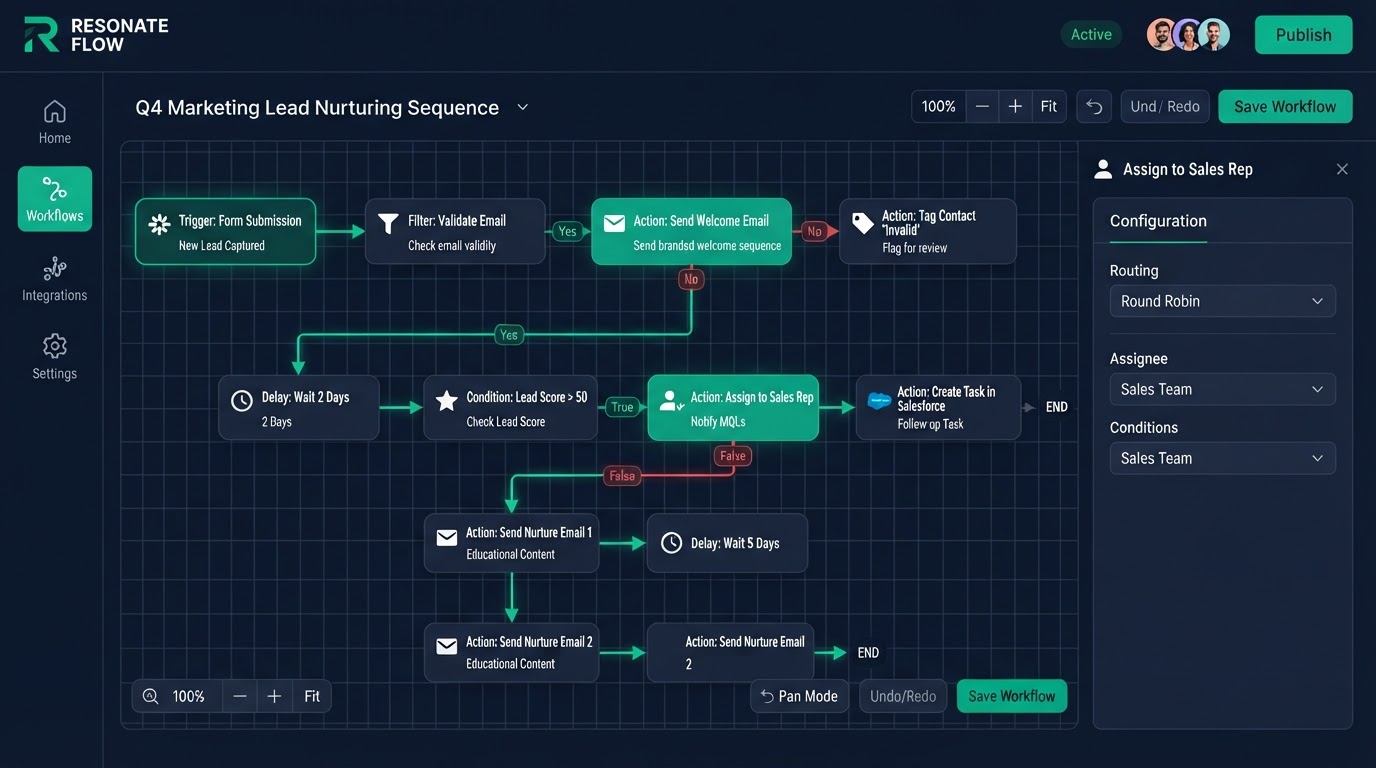
Workflow automation is the if-then logic that runs your follow-up while you sleep. It is the difference between a CRM that just stores data and one that actually drives revenue. Here is how workflows connect every trigger to the right action.
Key Takeaways
- Trigger-to-action design: Every workflow starts with a trigger (new lead, stage change, no-show, reply) and ends with actions (text, email, task, tag, field update).
- Branches and wait steps: Workflows branch based on replies, tags, and behavior.
- Multi-channel sequences: One workflow can send texts, emails, and voicemail drops across a cadence — reaching people where they actually reply.
- Error handling and fallbacks: We build fallback paths and error alerts so nothing breaks silently.
Trigger-to-action design
Every workflow starts with a trigger (new lead, stage change, no-show, reply) and ends with actions (text, email, task, tag, field update). We map every trigger, branch, and outcome before building so the logic is airtight. A workflow drawn out on paper first always builds faster and breaks less.
Branches and wait steps
Workflows branch based on replies, tags, and behavior. Wait steps pace the sequence. Reply detection pauses follow-up when a human takes over. This is not a dumb blast — it is smart, multi-step logic that adapts to what each lead does.
Multi-channel sequences
One workflow can send texts, emails, and voicemail drops across a cadence — reaching people where they actually reply. Text reply rates beat email open rates for most local businesses. The right message on the right channel at the right time is what converts.
Error handling and fallbacks
We build fallback paths and error alerts so nothing breaks silently. If a webhook fails or a step errors, you are told — not left wondering why follow-up stopped. Silent failures are the hidden killer of automation, so we make them loud.
Testing before launch
Every workflow is tested end to end with real test contacts before it goes live. We trigger each path, confirm each action fires, and check timing. You never ship a broken automation to your real leads.
Get 1 Month Free + Free Setup + Free Support
Start your platform account through our link and get an extended 30-day free trial — plus we'll set up your system, build your first workflow, and support you for free. See it working before you pay a cent.
Claim 1-Month Free TrialThe bottom line
Want to use "gohighlevel workflow automation" in your business? We can build it for you. You get clear pricing, a real delivery date in days, a Loom video walkthrough, and 15 days of free support. Even better — start your account through our link and get 1 month free, free setup, and free support while you test it. Book a free call today and we will show you how.
Frequently asked questions
Quick answers to the most common questions about gohighlevel workflow automation.
Written by certified experts — not AI filler
Every recommendation on this page is based on systems we have actually built and tested for real clients. We document the trigger logic, pipeline stages, and automation flows we deploy — then publish the before/after metrics from live projects. We do not recommend setups we have not delivered ourselves.
Author: CertifiedHighLevelExperts · Reviewed by: Certified GoHighLevel Experts Team · Last reviewed: 2026-09-16
Related topics for GoHighLevel Workflow Automation: If-Then Logic That Runs Itself
If you're researching gohighlevel workflow automation, these related terms and concepts come up next. We build all of them inside GoHighLevel.
Primary keyword
Secondary keywords
Related concepts (LSI)
These terms reflect real search intent around gohighlevel workflow automation. We cover each one in the content above and link to the relevant service, industry, or resource page so you can go deeper.
Was this article helpful?
Your feedback helps us write better guides.
Keep reading
Related services and industry guides to help you put this into action.